Review: Christmas Penguin Clipart Sublimation for Stitching
As a designer who spends half my life staring at digitized files and the other half watching needles punch through fabric, I have learned to be skeptical of cute holiday graphics. We all know the drill: a design looks adorable on a screen but turns into a tangled mess of thread breaks and puckering once it hits the hoop. That is why I took a close look at Christmas Penguin Clipart Sublimation not just as a digital asset, but as a potential candidate for real-world embroidery projects.
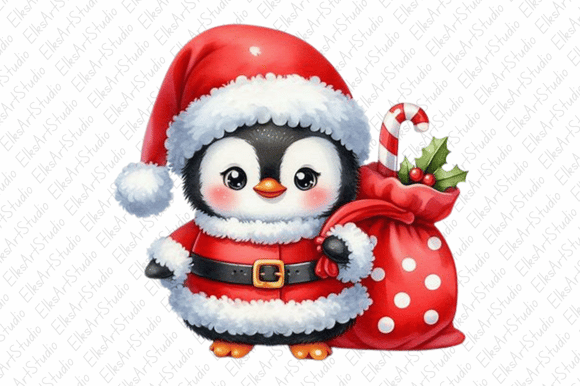
The initial impression of this piece is charmingly festive without being overly cluttered. In the world of Illustrations, simplicity often translates better to thread than complexity does. This penguin design carries a whimsical mood that feels right at home in a cozy winter setting. The visual personality is friendly and approachable, which is exactly what you want when creating a personalized gift or a handmade product intended to bring a smile. However, the transition from sublimation graphic to stitched reality requires careful consideration of line weight, color blocking, and overall layout.
Real-World Application: The Holiday Tote Test
To truly evaluate Christmas Penguin Clipart Sublimation, I imagined a specific scenario: preparing a custom order for a local boutique owner who wanted a run of canvas tote bags for her December pop-up shop. She needed something that would appeal to families and look professional enough to justify a premium price point. This is where the rubber meets the road.
If you are an Etsy seller or a craft business owner, you know that customers judge quality by the finish. A penguin design like this works exceptionally well for a tote bag design because the bold shapes allow for clear visibility even from a distance. When I visualized this design stitched onto a natural cotton canvas, the contrast between the black and white of the penguin against the beige fabric created a striking, clean look. It did not get lost in the fabric texture, which is a common pitfall with overly detailed machine embroidery design files.
Beyond totes, this design has strong potential for sweatshirt embroidery. A left-chest placement on a heather grey hoodie would look sophisticated and subtle. For baby embroidery, such as on a onesie or a burp cloth, the soft curves of the penguin’s body are safe and appealing, provided the stitch density is adjusted to keep the fabric soft against sensitive skin.
Stitching Performance and Technical Considerations
When converting a sublimation-style clipart into an embroidery file, the biggest challenge is maintaining the integrity of the shapes. Sublimation prints can handle gradients and fine lines that embroidery simply cannot. Therefore, using Christmas Penguin Clipart Sublimation as a reference for digitizing requires smart choices in stitch types.
For the penguin’s body, a fill stitch is likely necessary to cover the area efficiently. However, you must be mindful of stitch density. If the density is too high, the fabric will pucker, especially on lighter materials like tea towels or baby clothes. If it is too low, the backing might show through. I recommend testing a sample on scrap fabric first. Pay attention to how the thread colors interact. Black thread on dark navy fabric, for instance, will vanish. You might need to add a satin stitch border to define the edges clearly.
The beak and feet, typically orange or yellow, should probably be handled with a satin stitch if they are small enough, or a tight fill if they are larger. Satin stitches provide a shiny, premium look that catches the light, adding value to the finished product. However, long satin stitches can snag easily, so keep them under 7mm unless you use a tack-down stitch. For the eyes, a simple running stitch or a small French knot (if your machine allows) can add character without adding bulk.
Where to Use It Carefully
Not every surface is friendly to this type of design. While Christmas Penguin Clipart Sublimation is versatile, there are limitations. Avoid using it on highly textured fabrics like thick chenille or loose-weave knits unless you use a heavy-cut stabilizer. The small details might get lost in the pile of the fabric.
Curved surfaces present another challenge. If you are planning to put this on a cap or hat, the front panel is stiff enough to hold the shape, but side panels might distort the penguin’s proportions. Always check the hoop size compatibility. If the design is large, ensure your machine can handle the dimensions without requiring excessive re-hooping, which can lead to misalignment.
Also, be cautious with dark fabrics if the design relies heavily on white thread. White thread can appear translucent or dirty if not densely stitched. In such cases, consider using an applique design technique where you stitch down a piece of white felt or fabric for the penguin’s belly, then embroider the details on top. This reduces stitch count, saves time, and gives a crisp, clean look that customers love.
Boosting Brand Value and Customer Trust
From a business perspective, the right design elevates your brand. Using Christmas Penguin Clipart Sublimation effectively can enhance your commercial embroidery portfolio. It signals that you understand seasonal trends while maintaining quality. For small shop product lines, consistency is key. If this penguin fits your aesthetic, use it across various items—pillow covers, aprons, and kitchen towels—to create a cohesive holiday collection.
Buyers engage more with products that feel thoughtful. A well-executed embroidered penguin suggests care and craftsmanship, unlike a mass-produced print. This builds customer trust and encourages repeat business. When creating printable mockup images for your online store, ensure the lighting highlights the texture of the stitches. Show the dimensionality of the thread to differentiate your design assets from flat digital prints.
Practical Notes for the Designer
Before you commit to a large production run, take these steps:
- Test on Scrap Fabric: Always stitch out a test piece on the same material you plan to use for the final product. Check for puckering, thread breaks, and registration issues.
- Check Contrast: View your design in black and white. If the details disappear, you may need to adjust the stitch types or add outlines.
- Verify Licensing: Ensure that your use of Christmas Penguin Clipart Sublimation complies with the license terms. Some digital files are for personal use only, while others allow commercial sales of finished physical items. Never assume; always read the fine print.
- Stabilizer Selection: Match your stabilizer to your fabric. Cut-away for stretchy knits, tear-away for stable wovens. A poor stabilizer choice can ruin even the best digitizing.
- Thread Quality: Use high-quality polyester or rayon thread. Cheap thread breaks more often and fades faster, which reflects poorly on your handmade product.
In conclusion, Christmas Penguin Clipart Sublimation offers a delightful foundation for holiday embroidery projects. With careful attention to digitizing techniques, fabric selection, and stitching parameters, it can become a standout element in your embroidery project lineup. Whether you are creating a unique embroidered patch or a full-front custom apparel piece, this design has the charm and versatility to succeed, provided you respect the technical limits of the medium. Happy stitching.