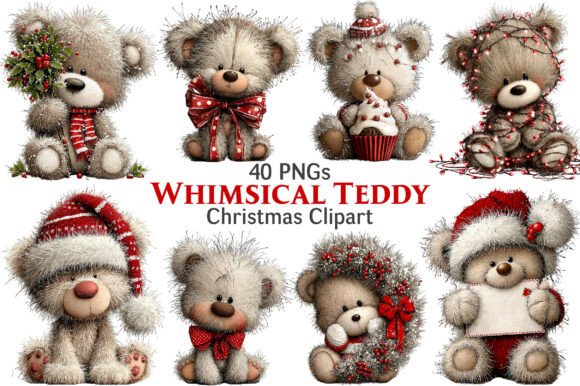
Reviewing Whimsical Christmas Teddy Clipart for Stitching
As a designer who spends half my life staring at digitized files and the other half watching needles punch through fabric, I have developed a specific kind of skepticism toward holiday graphics. We all know the drill: a cute image looks perfect on a screen but turns into a tangled mess of thread breaks and puckering once it hits the hoop. That is why I approached Whimsical Christmas Teddy Clipart with a critical eye, looking past the initial charm to see if it holds up under the mechanical stress of an embroidery machine.
This collection falls under the broader category of Illustrations, which usually implies a level of artistic detail that can be tricky to translate into thread. My goal was not just to admire the aesthetic but to determine if this design asset is viable for real-world commercial use. I wanted to know if it would survive a wash cycle on a baby onesie or look professional on a boutique tote bag. Here is my practical breakdown of how this design performs in the field.
First Impressions and Visual Personality
The immediate mood created by Whimsical Christmas Teddy Clipart is warm, nostalgic, and gently playful. It avoids the overly saturated, cartoonish extremes that often plague holiday graphics, opting instead for a softer, more hand-drawn feel. For an embroidery designer, this is crucial. Hard, sharp lines in digital art often require excessive satin stitching, which can lead to stiffness. The organic curves seen in these illustrations suggest a design that relies more on fluid motion, which typically translates better to fill stitches and running stitches.
The layout feels balanced, with enough negative space to allow the fabric texture to breathe. This is vital for maintaining the softness of the final product. If you are creating a personalized gift or a high-end handmade product, the visual personality needs to feel intentional, not just slapped on. This design carries a sense of whimsy that appeals to both children and adults, making it versatile for various demographics.
Real-World Application Scenarios
To truly test the viability of any machine embroidery design, you have to imagine it on actual goods. I visualized this teddy motif on a few different canvases to gauge its potential.
- Baby Items: On a soft cotton muslin blanket or a ribbed knit onesie, the whimsical nature of the bear fits perfectly. However, baby skin is sensitive, so the back of the stitching must be clean. This design seems suited for lighter stitch densities, which is a plus for comfort.
- Custom Apparel: Imagine this on the left chest of a heather grey sweatshirt. The contrast between the dark thread of the outline and the light fabric would create a striking yet subtle look. It works well for sweatshirt embroidery where you want a festive touch without overwhelming the garment.
- Tote Bags and Aprons: For a tote bag design intended for holiday grocery runs or gift carrying, the durability of the stitch matters. A canvas tote can handle higher density, allowing the teddy to pop with vibrant thread colors.
For Etsy sellers and small shop product creators, versatility is key. This design could easily anchor a line of holiday-themed kitchen towels or serve as a focal point on a decorative pillow cover. The charm lies in its ability to look equally at home on a rustic linen napkin as it does on a structured denim patch.
Technical Considerations and Fabric Challenges
While the aesthetic is strong, we must address the technical realities of stitching. Not every fabric behaves the same way, and Whimsical Christmas Teddy Clipart requires careful handling in certain scenarios.
If you are working with stretchy fabric like jersey knits for t-shirts, stabilization is non-negotiable. The whimsical curves of the teddy could distort if the fabric shifts during stitching. I recommend using a cut-away stabilizer for garments that will be washed frequently, ensuring the finished product retains its shape. For woven fabrics like cotton or linen, a tear-away stabilizer might suffice, but always test on scrap fabric first.
Dark fabrics present another challenge. If you are stitching a light-colored teddy on a navy or black background, you may need to adjust your stitch density or add an underlay to prevent the background color from showing through. Conversely, on light fabrics, ensure your thread choice has enough contrast to define the details. A lack of contrast can make the design look muddy from a distance.
Curved surfaces, such as caps or hats, require special attention. The center of the teddy’s face should align with the center of the cap to avoid distortion. If the design includes fine details near the edges, they might get lost in the curve. Always check the hoop size compatibility before starting. If the design is too large for a standard cap hoop, you may need to resize it, which could affect the clarity of smaller elements.
Enhancing Brand Value and Customer Trust
For craft business owners, the quality of your design assets directly impacts your brand perception. Using a low-quality digital embroidery file can result in thread breaks and customer complaints, which erodes trust. In contrast, a well-executed design like this can enhance your brand consistency and increase the perceived value of your items.
When customers see a clean, crisp embroidered teddy on a custom apparel piece or a holiday embroidery gift, they associate that quality with your shop. It signals professionalism. Furthermore, unique designs help your products stand out in a saturated market. Whether you are selling embroidered patches or full-sized blankets, the distinctiveness of the artwork drives buyer engagement.
Using this clipart for printable mockups before production can also save time and resources. By visualizing the end result digitally, you can make informed decisions about placement and color schemes, reducing the risk of costly mistakes during the actual stitching process.
Practical Designer Notes for Best Results
Before you commit to a large production run or list a new item in your store, follow these practical steps to ensure success with Whimsical Christmas Teddy Clipart:
- Test on Scrap Fabric: Never skip this step. Stitch the design on the same type of fabric you plan to use for the final product. This reveals any issues with tension, density, or registration.
- Check Thread Color Contrast: View your design in black and white. If the details disappear, you need to adjust your thread choices or simplify the design elements.
- Review Stitch Density: High density can cause puckering, especially on lightweight fabrics. Ensure the digitizing balances coverage with fabric integrity.
- Confirm Hoop Size: Make sure your machine’s hoop can accommodate the design dimensions without requiring re-hooping, which can lead to alignment errors.
- Inspect Small Details: Zoom in on the digital file. Are there tiny isolated stitches that might break? Simplify if necessary.
- Verify Licensing: If you plan to use this for commercial embroidery or sell design assets, confirm the license terms. Ensure you have the right to sell finished items made with this file.
In conclusion, Whimsical Christmas Teddy Clipart offers a charming and versatile option for holiday projects. With careful attention to fabric choice, stabilization, and stitch parameters, it can elevate your embroidery project from simple to stunning. It is a solid choice for designers looking to add a touch of warmth and professionalism to their seasonal collections.